Not all electrical stimulation systems are the same. Differences in waveform design, frequency, pulse duration, current delivery, available programs, power, and treatment options can significantly change how a device is used.
Phoenix Waveform was designed to provide the benefits of advanced direct current neuromuscular stimulation while giving clinicians, athletes, and home users something more: a complete electrical stimulation platform in one device.
Phoenix Waveform includes multiple preset direct current programs:
500 Hz | 300 Hz | 165 Hz | 135 Hz | 40 Hz | 10 Hz all with a square wave.

Rather than limiting the user to a single direct current frequency, these programs provide greater flexibility for different neuromuscular, rehabilitation, recovery, and performance applications.
The Phoenix Elite adds an additional high-output program called Phoenix Plus.
Phoenix Plus operates at 500 Hz, but uses a longer pulse duration than the standard 500 Hz program. This increases the electrical dose delivered with each pulse and produces a stronger stimulation at a given amplitude setting.
For clinicians and users who need greater stimulation capacity, Phoenix Plus provides another level of treatment flexibility.
One of the biggest differences with Phoenix is that it isn't limited to direct current stimulation.
In addition to its direct current programs, Phoenix Waveform incorporates several established forms of therapeutic electrical stimulation into one platform, including:
This allows Phoenix to be used for far more than a single stimulation technique or treatment philosophy.
When comparing Phoenix Waveform with Neubie, ARPwave, and conventional EMS devices, don't compare frequency alone.
Look at the complete system:
Waveform design + pulse duration + frequency + intensity + program selection + electrode placement + movement + clinical protocols
Phoenix Waveform combines advanced direct current stimulation with multiple therapeutic currents, HUNT mapping, targeted electrode placement, movement-based applications, microcurrent, and structured treatment protocols.
One device. Multiple waveforms. Multiple frequencies. A complete electrical stimulation toolkit for rehabilitation, performance, recovery, and pain management.


Max contractions per second: 500HZ
2 Channels 4 pads
Main current and background current
A blend of Direct Current and Alternating Current
Cleaner, and more efficient square waveform
Runs off a battery or while plugged into the wall
Contains Microcurrents
Max contractions per second: 245 HZ
Only 1 channel 2 pads
Main current and background current
A blend of Direct Current and Alternating Current
Sine waveform
Runs on battery only
No Microcurrents
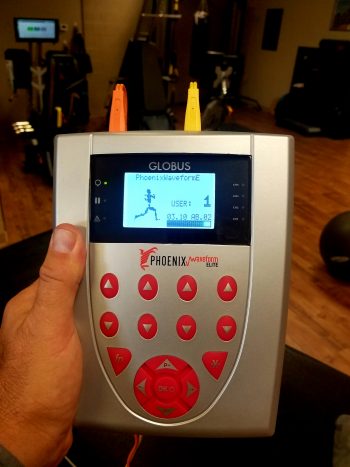
Phoenix Waveform Elite
Max contractions per second: 500HZ
2 Channels 4 pads
Main current and background current
A blend of Direct Current and Alternating Current
Finds the origin of the pain
Cleaner, and more efficient square waveform
Contains Microcurrents
You own it
Unlimited use with no minutes to purchase
$4100
Phoenix Waveform PRO
Max contractions per second: 500HZ
2 Channels 4 pads
Main current and background current
A blend of Direct Current and Alternating Current
Finds origin of pain
Cleaner, and more efficient square waveform
Contains Microcurrents
You own it
Unlimited use with no minutes to purchase
$3500
Phoenix Waveform Elite
Max contractions per second: 500HZ
A blend of Direct Current and Alternating Current
Main current and background current
Cleaner, and more efficient square waveform
No restrictive licenses
No monthly fees
No usage charges
Contains Microcurrents
$4100
Phoenix Waveform Elite
Max contractions per second: 500HZ
A blend of Direct Current and Alternating Current
Main current and background current
Cleaner, and more efficient square waveform
No restrictive licenses
No monthly fees
No usage charges
Contains Microcurrents
$4100
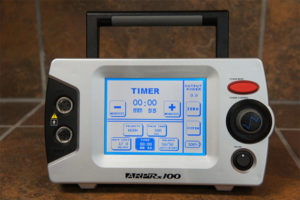
ARPwave RX 100
Max contractions per second: 500 HZ
2 channels 4 pads
Main current and background current
A blend of Direct Current and Alternating Current
Finds the origin of the pain
Sine waveform
No Microcurrents
Lease
Must purchase additional usage minutes
$15,000
ARPwave RX 100
Max contractions per second: 500 HZ
2 channels 4 pads
Main current and background current
A blend of Direct Current and Alternating Current
Finds the origin of the pain
Sine waveform
No Microcurrents
Lease
Must purchase additional usage minutes
$15,000

NX PRO
Max contractions per second: 250HZ
A blend of Direct Current and Alternating Current
Waveform shape - not listed
No restrictive licenses
No monthly fees
No usage charges
No Microcurrents
$13,000
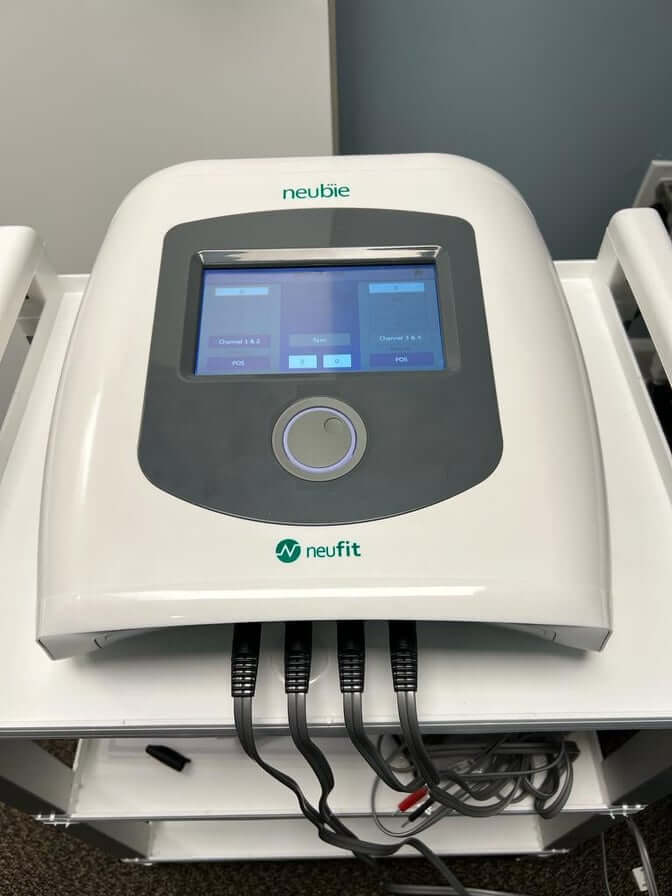
Neubie
Max contractions per second: 500HZ
A blend of Direct Current and Alternating Current
$18,000
Not every Phoenix Waveform treatment needs to be high intensity.

There are times when the goal isn't to produce a powerful muscle contraction, perform HUNT mapping or challenge the neuromuscular system.
Sometimes the goal is simply to turn the intensity down, create gentle rhythmic stimulation and transition into recovery.
That's why Phoenix includes the ECO Program.
ECO stands for Endorphin, Circulation and Oxygenation.
It is a low-frequency, cycling electrical stimulation program designed to provide a very different experience from the higher-frequency Phoenix programs used for HUNT mapping, muscle activation and neuromuscular training.
ECO automatically cycles through a range of low frequencies during a 12-minute session.
12 Hz → 8 Hz → 12 Hz
The frequency gradually cycles down and back over approximately 30-second intervals.
8 Hz → 4 Hz → 8 Hz
The program continues cycling through progressively lower frequencies.
Instead of remaining at one fixed frequency, ECO continually changes the stimulation frequency throughout the session.
The result is a gentler, rhythmic stimulation experience that is distinctly different from Phoenix's high-frequency neuromuscular programs.
Frequency changes how electrical stimulation interacts with sensory and motor nerves and influences the type of muscle response produced.
Phoenix's higher-frequency programs are designed for applications such as HUNT mapping, neuromuscular activation and movement-based training.
ECO serves a different purpose.
By cycling through lower frequencies, ECO can be used when you want comfortable, rhythmic stimulation rather than an intense sustained neuromuscular contraction.
Think of it as changing gears.
HUNT and higher-frequency Phoenix programs = activation and neuromuscular work
ECO = lower-frequency stimulation and recovery
Both have a place within the Phoenix system.
One of our favorite ways to use ECO is after a demanding Phoenix treatment or training session.
During higher-intensity electrical stimulation, the muscles and nervous system are being challenged.
After the work is finished, we don't necessarily need more high-intensity stimulation.
We can change the objective.
Reduce the intensity.
Allow the muscles to relax.
And finish with a comfortable period of low-frequency stimulation.
That's where ECO fits extremely well.
Older Phoenix training materials specifically recommend ECO as an option following strength training or higher-intensity Phoenix applications.
ECO can be incorporated into Phoenix sessions when a lower-frequency stimulation option is desired, particularly:
After a Phoenix HUNT or treatment session
Transition from higher-frequency stimulation to a lower-frequency finish.
After strength or performance training
Use ECO as part of the post-training recovery period.
After neuromuscular activation
Follow more demanding stimulation with a gentler rhythmic program.
During a recovery session
ECO can also be used independently when the objective is comfortable low-frequency electrical stimulation rather than high-intensity activation.
Dr. Jeff Banas, DC
Dr. Jeff Banas is a Chiropractic Sports Physician, Certified Strength & Conditioning Specialist, and Neurotherapy Expert with over 25 years of experience in musculoskeletal rehabilitation, neuromuscular re-education, and performance optimization.
He earned his Doctor of Chiropractic (DC) degree from the National University of Health Sciences, where he completed advanced training in:


Throughout his career, Dr. Banas has provided care for:
With extensive hands-on experience using systems such as ARPwave, Therastim, and other neuromodulation platforms, Dr. Banas helped develop the Phoenix Waveform, a clinician driven direct current neurotherapy device created as a more accessible and cost-effective alternative to traditional high-priced systems.
Dr. Banas focuses on restoring function by retraining the nervous system, activating inhibited muscles, improving movement patterns, and accelerating recovery through targeted DC neurostimulation and corrective protocols.
He provides:
Known for his clinical precision and evidence-based approach, Dr. Banas continues to work directly with patients and professionals seeking advanced neurotherapy solutions without the limitations of corporate sales models or restrictive leasing programs.

2026 Phoenix Waveform / Dr. Jeff Banas. All rights reserved.
The content on this website is for informational and educational purposes only and is not intended as medical advice. It should not be used to diagnose, treat, cure, or prevent any health condition. Always consult a licensed healthcare professional before beginning any new treatment, rehabilitation program, or use of electrotherapy or neuromodulation devices. Use of this website does not create a doctor–patient relationship. Individual results will vary.
